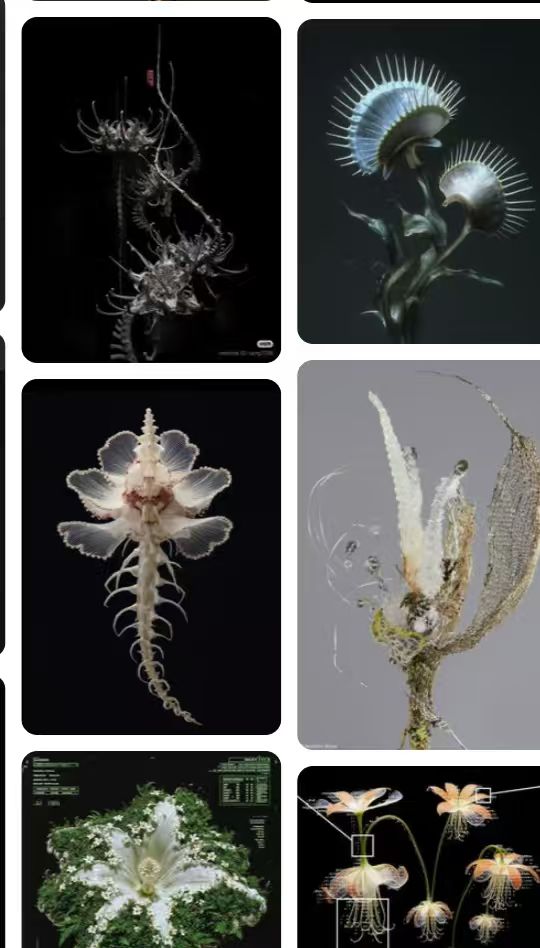
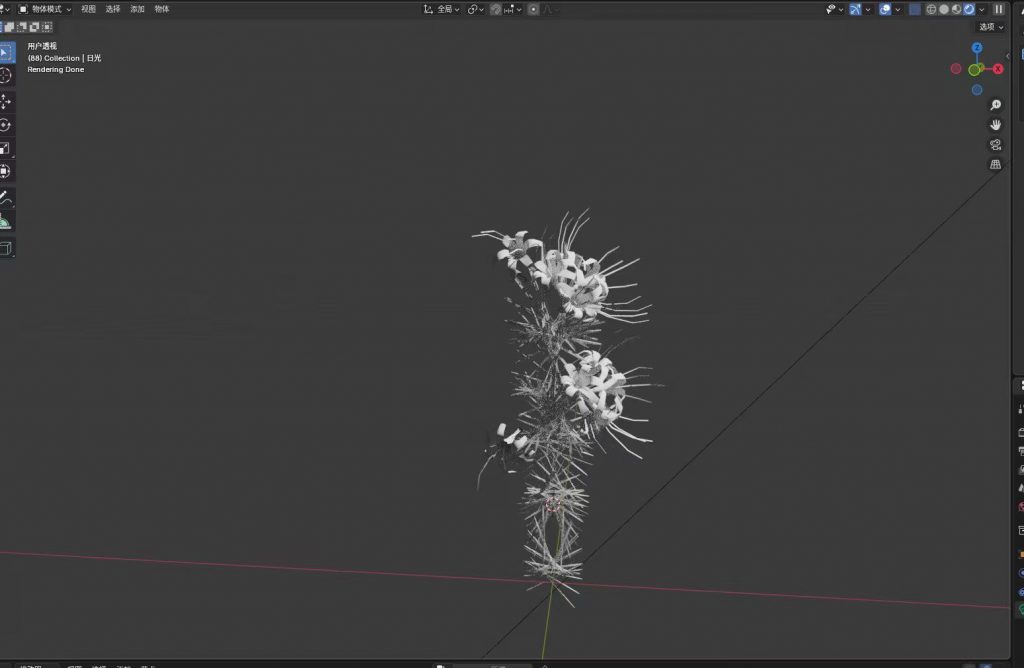
During our research, we encountered the concept related to “Fractals / Procedural Fracturing”, which involves the regular or procedural combination of relatively simple basic geometric units to generate a complex overall model. This method is commonly used in conceptual art and procedural generation design, often resulting in visually striking and fantastical modeling effects.
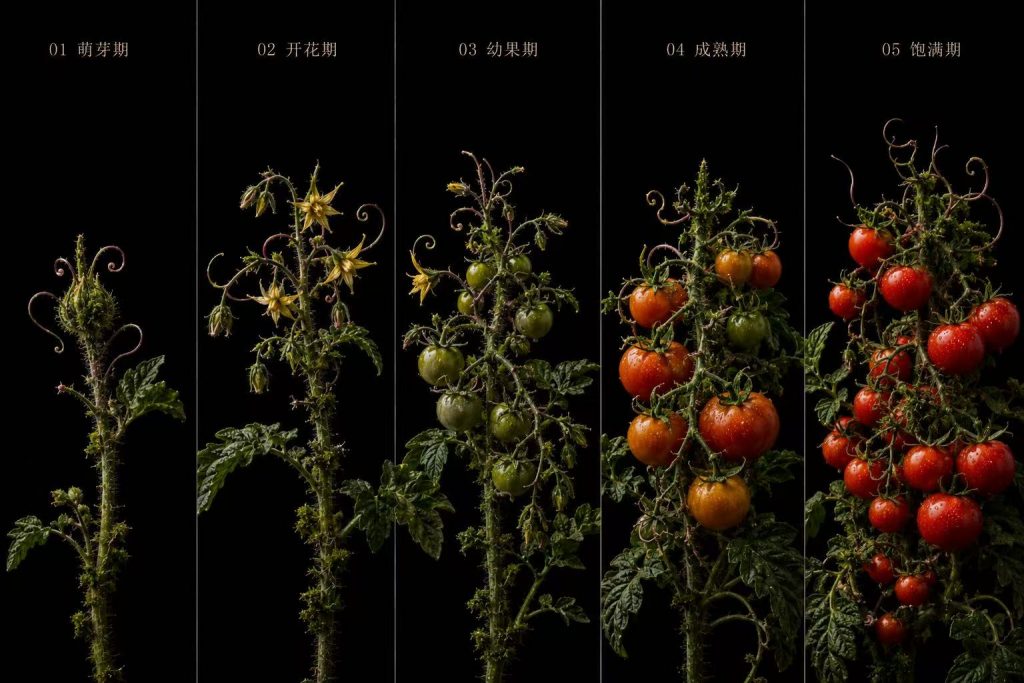
In the context of plant modeling, this method can construct highly detailed and decorative individual plant forms through a modular structure, exhibiting strong artistic quality and expressiveness in visual representation. However, from the perspective of practical application in projects, this approach has certain limitations. On the one hand, the generation process of the modular structure significantly increases model complexity and the number of faces, placing a considerable burden on real-time rendering performance.
On the other hand, if a growth animation system is superimposed on top of this, the computational and implementation costs will further increase, which may not be suitable for the current project’s technical framework.
Based on the aforementioned analysis, we believe that there are certain risks associated with the large-scale application of this method in gaming or real-time interactive systems. However, it still holds high application value in physical installations or static displays. Especially in the display of individual plants on the installation side, the visual complexity and artistic expression brought by the typed structure may effectively enhance the overall spatial visual richness and futuristic atmosphere.
Therefore, this scheme is more suitable as a visual enhancement method for installations or local displays, rather than as the core plant generation and animation scheme in an overall system.

test from orange
Leave a Reply