In the preliminary shooting stage, we first experimented with a fixed camera position, recording daily activities such as kittens eating and playing, attempting to observe their behavior from the perspective of a camera as an object in the environment. However, after viewing the test footage, we found that although this shooting method could record the activity state of the kittens, the overall narrative and immersion were relatively weak. The audience was more in the position of a bystander, making it difficult to form a strong immersive experience.
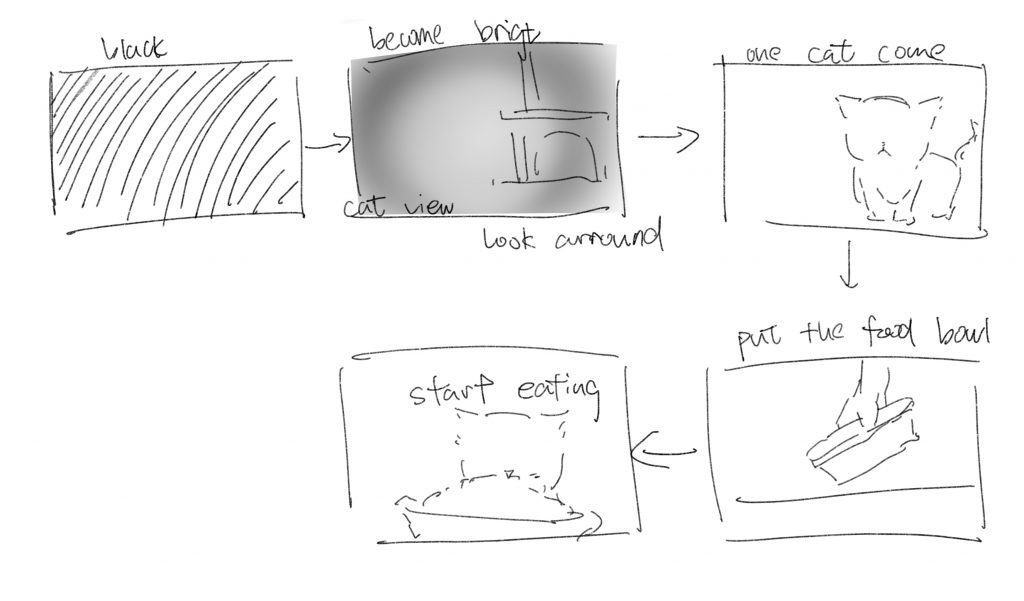
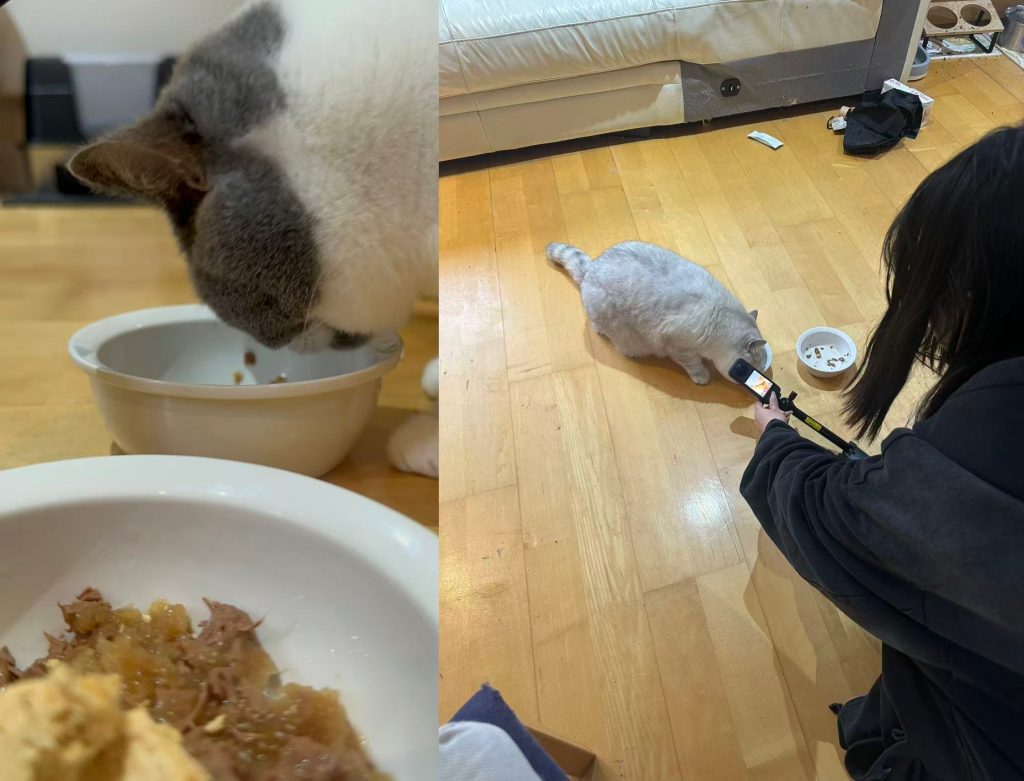
Based on this discovery, we adjusted the filming plan, simulating the camera as the first-person perspective of a kitten, and arranged for it to participate in feeding and interactive activities with other kittens. In this plan, the audience will observe the surrounding environment directly as a “kitten”. For example, when the owner places the food bowl and cat food in front of them, other kittens gradually approach and start eating. The audience can gradually realize that their identity and perspective have shifted to that of a kitten through environmental information and character interactions.
In addition, we have designed some motion shots that simulate cat behavior characteristics, such as approaching companions, following movements, and participating in interactions, to further enhance the first-person perspective experience. Preliminary tests indicate that this non-human subject perspective can effectively enhance the audience’s sense of novelty and immersion, enabling them to participate in the spatial narrative constructed by the 360-degree panoramic imagery in a more active manner.
Leave a Reply